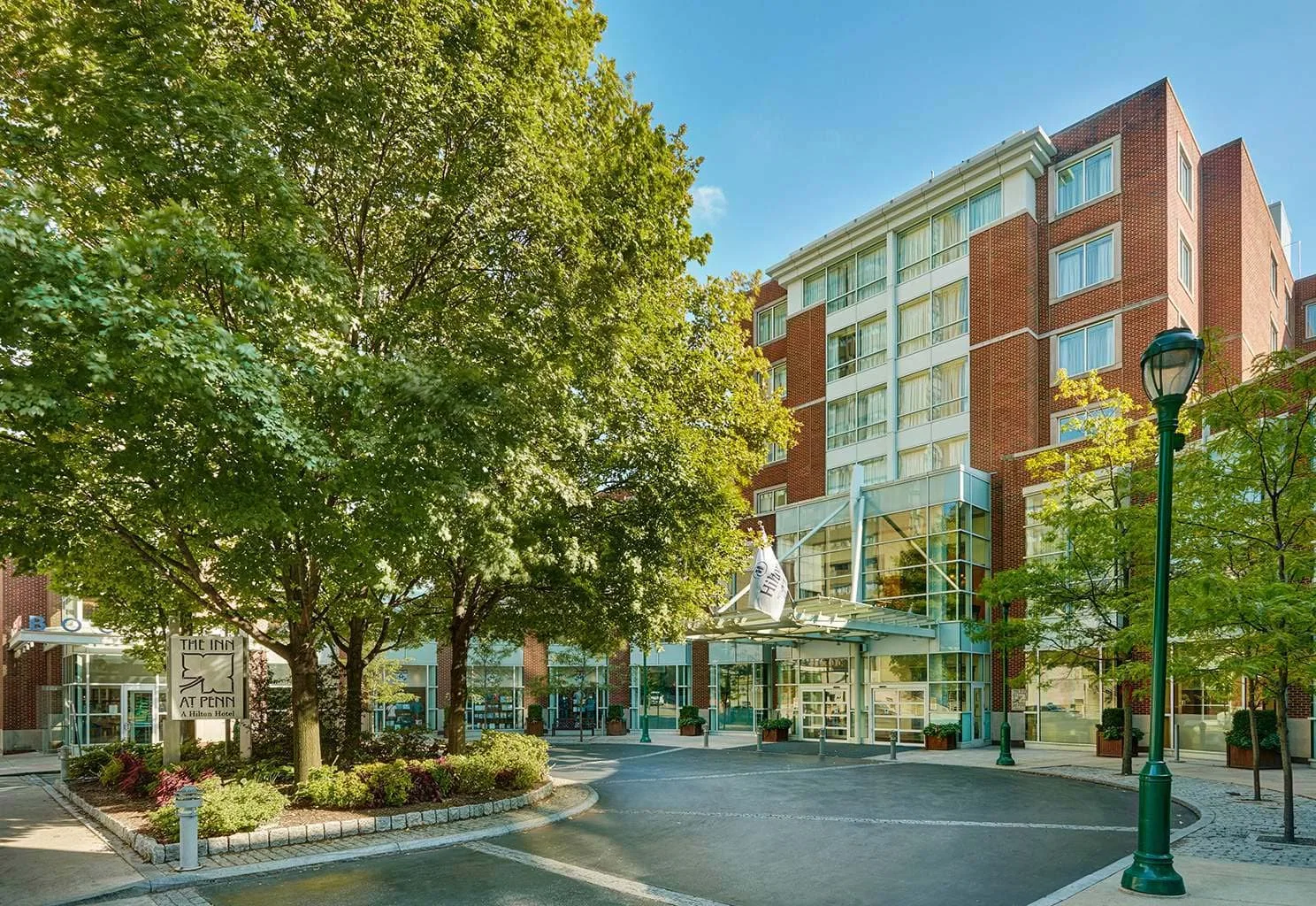
This hotel is the better fit when the program wants a polished Penn-connected base with a more deliberate guest experience and an easier path to university-facing meetings.
It works for board visits, recruiting days, alumni functions, and other stays where the hotel itself needs to feel authoritative without turning loud.
The Penn address carries the weight.
Focus areas
- Keep the Penn connection visible.
- Use the formal service tone as the cue.
- Plan for higher-touch guest arrivals.
- Treat the hotel as a university anchor, not simply a sleeping room block.
What drives the Philadelphia calendar
Philadelphia is a working trade show market.
Trade show weeks in Philadelphia compress decisions.
Convention District Offsites and Hospitality is one of the sectors that shapes the Philadelphia calendar. Reading Terminal Market, museums, and cultural venues create strong demand for attendee receptions, customer dinners, and sponsor activations adjacent to show floors.
Operational rules on the Philadelphia floor
Pennsylvania Convention Center: the center's training partnership materials identify labor partners including Laborers Local 332, IATSE Local 8, IBEW Local 98, and Iron Workers Local 405.
Practical planning rules for the Inn at Penn, a Hilton Hotel in Philadelphia: Philadelphia venue requirements vary by facility, organizer, and event format.
Scope at the Inn at Penn, a Hilton Hotel
a bad one has many, because they weren't.
Out of scope by default are show organizer fees, booth lease costs paid directly to the show, staff travel and per diems, and any custom software or data-capture tooling the client runs on its own stack. Those stay on the client side and plug into the project through coordination, not rebilling.
What an engagement actually looks like
Venue coordination comes next.
Install days are owned by a single on-site lead.
During show hours, the booth is a live operating space.
That document drives the next booking.
Pricing and scheduling
Cost scales with how it is built, how big it is, what the venue charges for its own services, what the graphics look like, how far the crates travel, and how many days the team stays on-site.
Lead time drives everything. Custom: 16 to 20 weeks. Rental: 8 to 12.
Outcomes we optimize for
Trade show ROI is measured at the lead and pipeline level.
A week after the show, the booth's actual floor performance is already clearer than any pre-show projection. We document those observations alongside the technical closeout so the next cycle inherits real signal, not nostalgia.
What makes our work different
Trade Show Services of Philadelphia keeps the work local.
The difference from a national vendor shows up at the dock.
About the Inn at Penn, a Hilton Hotel
The University City hotel has 248 rooms and maximum meeting capacity of 575.
Show types that fit well here: medical meetings, campus conferences, life sciences programs, board retreats.
Projects at the Inn at Penn, a Hilton Hotel start with its published floor plan, dock schedule, and service-order deadlines.
Frequently asked questions
How does labor work in Philadelphia?
It runs venue by venue.
How much lead time is ideal?
Custom builds run best with 16 to 20 weeks of lead time. Rentals take 8 to 12 weeks.
What information kicks off a project?
The show, the venue, the booth number, the dates, and a target budget range. From those, an initial scope and a realistic cost come back within a few days.
Who runs the booth on-site?
One named show-site lead runs the install, the show hours, and the strike. That person carries the floor plan and the punch list from crates to doors and reports up once a day.
Can the booth travel to the next city on our calendar?
Same structure, swappable graphics, standard crates.
What happens if something breaks during show hours?
The on-site lead handles it.