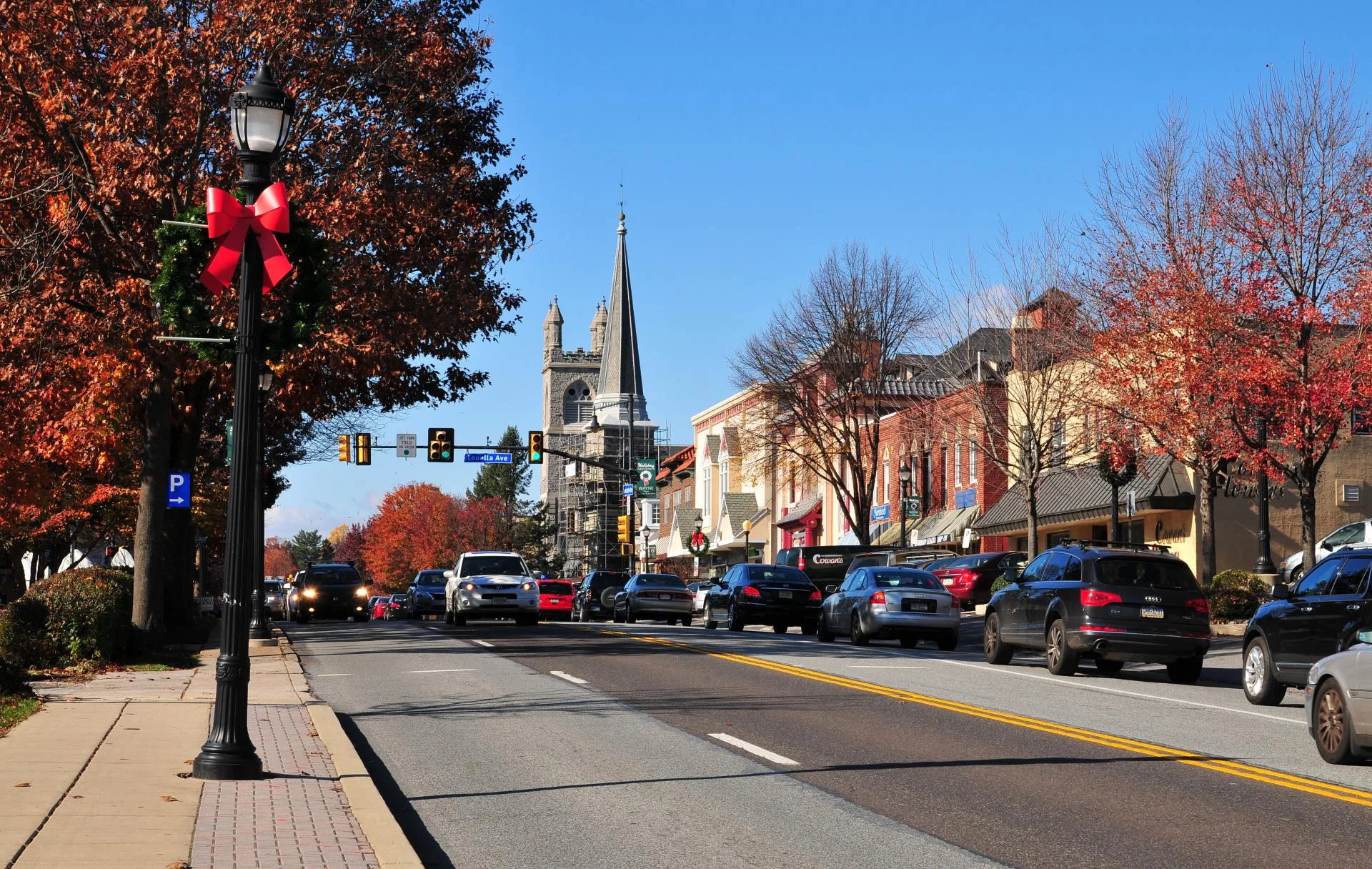
This district makes sense when the day is designed around a corporate campus, a discreet lunch, and the kind of meeting that benefits from quieter streets.
Radnor has its own business personality: polished, reserved, and led by office parks and campus logic rather than hotel bustle.
The right plan uses that calm to make the meeting feel composed instead of overworked.
Focus areas
- Use the campus driveways.
- Keep the boardroom pace slower.
- Plan around executive lunches.
- Treat the suburb like a privacy asset.
Radnor — what the area looks like for events
Radnor sits in the Western Suburban Expo Corridor area.
Projects in Radnor get scoped the same way as work in the Philadelphia core: venue, dates, footprint, and budget frame first, then the build plan. The difference is usually in freight routing and which nearby buildings are the closest fit.
Philadelphia as a trade show city
Trade shows in Philadelphia move fast.
Trade show weeks in Philadelphia compress decisions.
40 percent of the U.S.
Why Trade Show Services of Philadelphia
The difference from a national vendor shows up at the dock.
Over a multi-show calendar, the compound value of a single team shows up in fewer surprises. The second install is faster than the first, the third is faster than the second, and by the fourth the project runs on memory and documentation rather than first-principles planning.
Philadelphia convention venues and meeting properties
The Fillmore Philadelphia: the venue offers 25,000 square feet of flexible design space and can accommodate groups from 50 to 3,000.
The site is about 2.5 miles from the convention center and includes full-service event production, sound, and lighting.
The Fillmore Philadelphia suits product launches, concert style activations, award ceremonies, after hours receptions.
National Constitution Center. The venue with maximum capacity of 3,000 and onsite AV plus an exclusive caterer.
Philadelphia labor and venue services
At Pennsylvania Convention Center, explicit exhibitor work rules covering personally owned vehicles, booth setup by full-time employees, self-installed lighting in limited cases, and when show labor or electricians must perform work.
At the Pennsylvania Convention Center, exhibitors should expect published work rules, venue-run exhibitor services, and exclusive rigging requirements. Hotels, museums, casinos, and suburban venues around Philadelphia typically route catering, AV, and event support through venue teams or approved partners.
Scope in Radnor
Individual projects layer or remove items based on scope.
a bad one has many, because they weren't.
The process from start to finish
Everything downstream hinges on those answers.
Venue coordination comes next.
With venue details locked, production runs.
The install phase has one owner on the floor.
During show hours, the booth is a live operating space.
Cost and lead time
The levers that matter: build path (custom, rental, or hybrid), footprint, venue service fees, graphics, freight, and supervision days. A 10x10 turnkey rental and a 30x50 custom island with a double deck are entirely different projects.
A clean schedule starts 4 to 5 months out for custom work and 2 to 3 months for rentals. Shorter lead times are workable but push rush premiums and limit material choices.
What a successful project looks like
Exhibitors who measure programs seriously track leads, floor-booked meetings, and post-show pipeline. The build and the install are upstream inputs to those KPIs.
Client teams sometimes want the booth to carry the pipeline on its own, but the best-performing programs treat the booth as a platform and put real operators on it. On-floor conversation discipline moves the KPIs more than any scenic decision.
Frequently asked questions
Do you work at Philadelphia Marriott Downtown?
Yes. The hotel with 1,408 rooms and maximum event capacity of 4,500.
How does labor work in Philadelphia?
It runs venue by venue.
How much lead time is ideal?
Custom builds run best with 16 to 20 weeks of lead time. Rentals take 8 to 12 weeks.
What information kicks off a project?
The show, the venue, the booth number, the dates, and a target budget range. From those, an initial scope and a realistic cost come back within a few days.
Who runs the booth on-site?
One named show-site lead runs the install, the show hours, and the strike. That person carries the floor plan and the punch list from crates to doors and reports up once a day.
Can the booth travel to the next city on our calendar?
Same structure, swappable graphics, standard crates.
What happens if something breaks during show hours?
The on-site lead handles it.